

단층 지붕 멤브레인은 다음과 같은 여러 가지 이유로 가장 인기 있는 지붕 시스템 중 하나가 되었습니다:
- 유연성
- 경량
- 내구성 및 수명
- 손쉬운 유지 관리
- 간편한 설치
- 경쟁력 있는 가격
- 환경 친화적
- 에너지 효율
Single ply roof membranes are typically categorized as thermoplastic membranes. One of the key benefits of thermoplastic membranes is the ability to heat weld their seams and create a permanent seal. Our guide explains how hot air welding works.
The two most common thermoplastic single ply roof membranes are Polyvinyl Chloride (PVC) and Thermoplastic Olefin (TPO). These membranes are usually offered in white or light colors because the lighter colors reflect sunlight before it can be absorbed, potentially reducing building cooling costs. See our roofing membrane welding machines for PVC and TPO.
PVC 및 TPO 멤브레인에는 일반적으로 강도와 안정성을 높여주는 강화층이 포함되어 있습니다. 본질적으로 내화성을 지닌 PVC 멤브레인은 일반적으로 폴리에스테르 또는 섬유 유리로 강화되며 유연성을 부여하기 위해 가소제와 같은 다양한 첨가제가 포함되어 있습니다. 일반적으로 폴리프로필렌과 에틸렌-프로필렌 고무의 혼합물인 TPO 멤브레인은 일반적으로 폴리에스테르로 강화되며 난연제 및 자외선 흡수제와 같은 첨가제가 포함되어 있습니다.
These membranes share the same range of sheet widths - 6 to 12 feet - and thickness - 45 mils to 90 mils. When they are installed, a properly executed heat seam is critical to their durability and longevity. Roofers make these seams with hot air welding, which melts the membrane surfaces with heated air and presses them into one watertight seam.
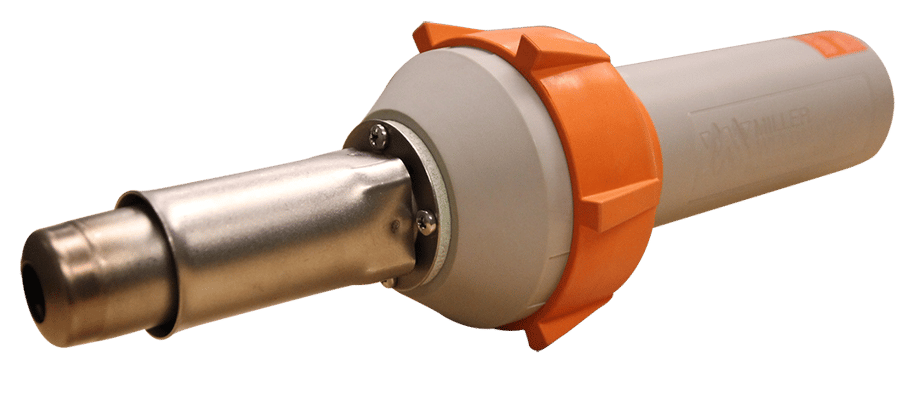
For repair and finish work on the roof, Miller Weldmaster's EliteAir hand roof welder heat welds roofing membrane seams. Roofing manufacturers who weld membrane panels in-house use the TG3600, the T300 Flex or a Moduline Geomembrane Multi-Roll line.
Contact one of our roofing specialists to find the right machine for your TPO roof membrane or PVC roof membrane welding application.