PVC tarp welding for truck covers requires strong, weather-resistant seams capable of handling constant road vibration, repeated flexing, wind exposure, and tie-down stress. Unlike many stationary tarp applications, truck covers are continually exposed to movement and changing weather conditions, making seam quality a critical factor in the durability of the finished product.
As fleets prepare their equipment for colder temperatures, snow, rain, and other winter conditions, fabricators need to be ready for increased demand. Having the right equipment and processes in place can help manufacturers produce consistent, durable truck covers without sacrificing productivity. Explore Miller Weldmaster's fabric welding machine lineup to learn more about solutions for industrial fabric fabrication.
주요 내용
- Truck cover seams experience constant mechanical stress from road vibration, wind, flexing, and tie-down forces, making weld quality critical to long-term performance.
- Hot wedge welding is well suited for long, straight seams, while hot air welding provides flexibility for curved and more complex areas.
- PVC coating formulation, material construction, and fabric weight can all influence welding parameters and seam consistency.
- Grommets and tie-down points should be treated as part of the cover's load-distribution system rather than simply finishing details.
- Fabricators expecting increased truck cover demand ahead of winter should evaluate production capacity before seasonal orders begin to build.
What Makes Truck Cover Welding Different From Other Tarp Applications?
Truck tarps and covers operate in a demanding environment. A stationary cover may experience weather and tension, but a truck cover must withstand those conditions while traveling at highway speeds and continually moving with the vehicle.
Road vibration causes the material and seams to flex repeatedly. Wind can create lift and pressure across large sections of the cover, while straps, grommets, and other tie-down systems concentrate force at specific points.
Those conditions make seam construction especially important.
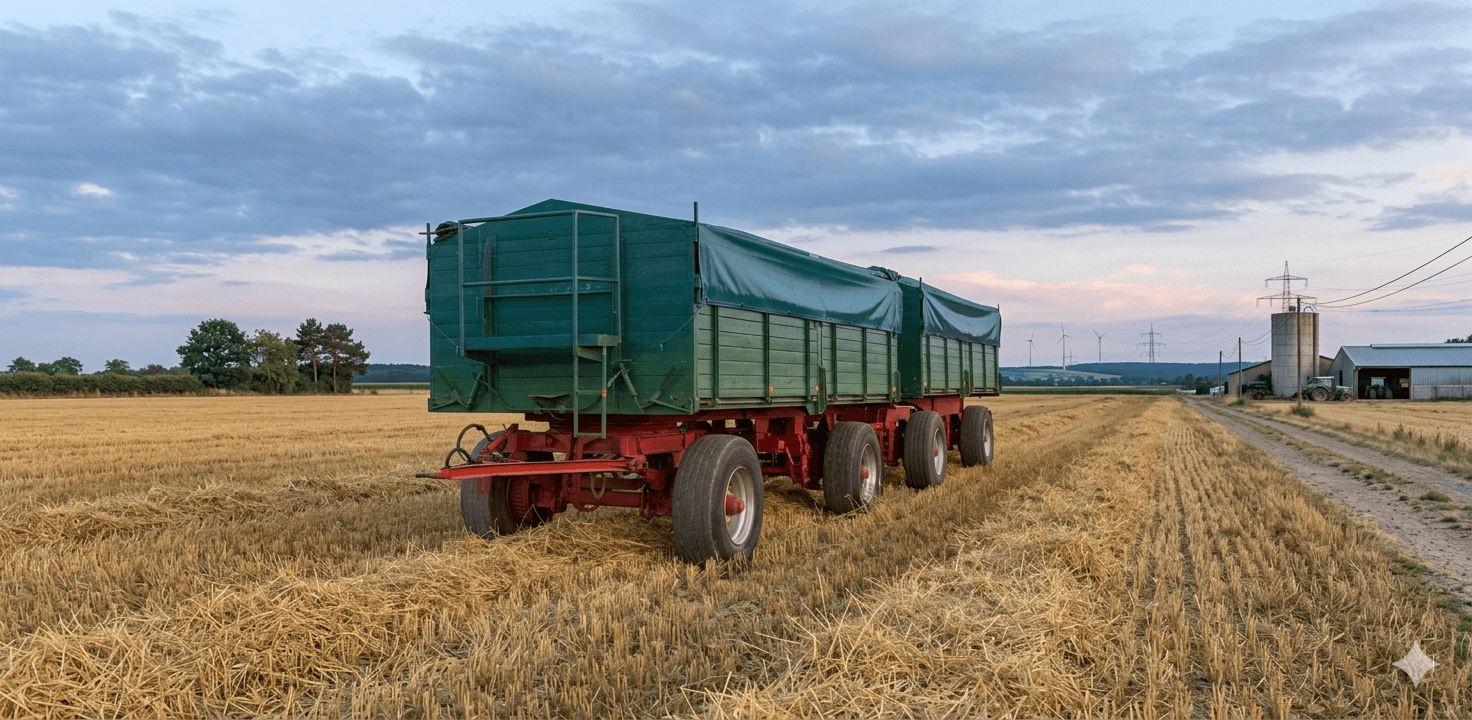
Truck cover design also changes depending on the hauling application. Side curtains, flatbed covers, open-bed tarps, and dump truck covers can each experience different types of stress, so the tarp size should match the goods being transported, and custom-fit covers can reduce aerodynamic drag and flapping. Understanding how truck tarp types differ by hauling application can help fabricators determine which construction methods are appropriate for the finished product.
PVC tarp covers also help contain dust, debris, and moisture during transport.
Side-Loading vs. Flatbed and Open-Bed Covers
Side curtain systems are designed to move laterally as the trailer is opened and closed. As a result, the fabric experiences repeated movement while loads can become concentrated around areas such as the top rail, bottom hem, and attachment points.
Flatbed and open-bed covers experience different forces. Wind can create lift across the surface of the cover, while straps and tie-downs distribute tension around its perimeter.
Because these applications behave differently, seam placement, hems, reinforcement, and welding methods should reflect the actual forces the finished cover will experience.
For fabricators producing applications such as side curtains, the T600 Flex provides flexibility for welding a variety of industrial fabric products and seam configurations.
Why Road Vibration and Flex Matter for Seam Design
A truck tarp seam does not simply need to survive a single heavy load. It needs to withstand thousands of cycles of vibration and movement over its service life.
As a truck travels, the fabric continuously moves. That movement can place repeated stress on seams, corners, hems, grommets, and other attachment points.
This cyclical loading is one reason seam consistency is so important. A weak or inconsistent area can become a point where stress concentrates, potentially leading to premature wear.
Fabricators should therefore evaluate seam construction based on the actual environment in which the cover will operate—not simply how strong it appears immediately after fabrication.
Why Heat-Welded Seams Outperform Stitching on Truck Covers
Heat welding creates a continuous bond between compatible thermoplastic materials, eliminating the needle holes created by traditional sewing and reducing potential leak points compared to stitching. For PVC truck covers exposed to rain, snow, road spray, and repeated movement, this can provide an important advantage.
Sewing mechanically joins material using thread. Every stitch also creates a penetration through the coated fabric. Those penetrations can become potential pathways for moisture, and thread or stitch areas may experience wear as the cover repeatedly flexes.
Heat welding takes a different approach. By applying controlled heating and pressure, compatible thermoplastic surfaces are bonded together to create a continuous seam.
The result is a clean, consistent seam without relying on thread to hold the material together. For truck covers expected to perform through demanding winter conditions, that combination of durability and weather resistance can be especially valuable.
Learn more about what seam strength testing involves when evaluating welded tarp construction.
Hot Wedge Welding for Long, Straight Panel Seams
Hot wedge welding uses a heated metal wedge positioned between layers of thermoplastic material. Heat is transferred directly to the surfaces before pressure rollers bring the heated layers together.
Because the process uses direct contact rather than heated airflow, it is particularly effective for controlled, repeatable welding on long seams.
Truck covers often require large fabric panels to be joined together, making long, straight seam production an important part of the fabrication process. Consistent speed, temperature, and pressure help create repeatable welds from one section to the next.
Learn more about hot wedge welding technology and its applications for industrial fabrics.
Where Hot Air Welding Still Fits: Curved and Nose Sections in Truck Covers
Not every section of a truck cover is straight.
Curved nose sections, shaped panels, repairs, and other detailed areas may require greater maneuverability. Hot air welding can provide that flexibility by directing heated air between material layers before pressure is applied. Where application requirements allow, seam construction should typically use a fused overlap in the 1.5 to 2-inch range.
For fabricators producing multiple styles of truck covers, having the ability to choose the appropriate welding technology for each seam—including high frequency options such as hf welding for suitable PVC-coated applications—can improve both efficiency and finished-product quality.
| 솔기 유형 | 권장 용접 방법 |
|---|---|
| Long, straight bed panels | 핫 웨지 용접 |
| Curved or shaped nose sections | 열풍 용접 |
| Hem and pocket seams | Hot wedge or hot air, depending on configuration |
| Patch and repair work | Hot air or application-appropriate welding method |
Material Weight and Weldability for PVC Tarpaulin-Coated Truck Cover Fabric
The weldability of PVC-coated truck cover fabric depends on more than material thickness alone. While truck cover fabrics commonly range from 450 to 900 gsm, base fabric construction, PVC coating formulation, coating consistency, and the finished material's intended application all influence whether a material is suitable for the welding process.
Heavier materials may require different heat, speed, and pressure settings than lighter fabrics, so choosing a tarp with sufficient thickness and strength is important for durability. At the same time, two materials of similar thickness can behave differently if their coating formulations are not the same.
Understanding PVC-coated thermoplastic weldability is therefore an important part of developing a repeatable truck cover fabrication process. Heavy-duty tarps are essential for long-haul routes and abrasive materials, while light-to-medium duty tarps are best for short-hauls and mild climates.
Matching Fabric Weight to Application
Truck cover materials should be selected based on the demands of the application.
A cover used for demanding flatbed or dump applications may require a heavier construction than material used in other applications. Side curtains may have their own requirements based on flexibility, movement, durability, and the way the curtain interacts with the trailer.
Fabricators should avoid assuming that heavier automatically means better. Material should instead be matched to the load, operating environment, cover design, and welding process.
Before committing to production, test welding the actual material is an important step for establishing appropriate machine parameters.
Why Coating Consistency Affects Seam Quality
PVC coatings can vary between material manufacturers and even between different product lines from the same supplier.
Those variations may influence how quickly the material responds to heat and how much energy is required to create a consistent bond.
When introducing a new material, fabricators should perform test welds rather than assuming existing settings will produce identical results. Temperature, speed, pressure, and welding technology may need to be adjusted to establish the desired seam.
Documenting successful settings can then make it easier for operators to reproduce results during future production runs.
Grommet and Tie-Down Placement: An Engineering Decision, Not a Finishing Step
Grommets may look like a finishing detail, but on a truck cover they are part of the system responsible for transferring load from the fabric to the vehicle, and their tie-down design directly supports proper install and helps prevent the tarp from falling off.
Every tie-down point introduces concentrated force. If that force is not properly distributed, the area surrounding the grommet can become a potential failure point even when the primary welded seams remain strong.
Placement should therefore be considered alongside seam construction, hem design, reinforcement, and the expected operating environment. Depending on the setup, ropes or spring clamps may be used to secure the cover and keep it tied down during transport so it does not fly off.
Standard Grommet Spacing for Truck Cover Applications
General heavy-duty tarp applications may use grommet spacing in the range of approximately 12 to 18 inches, but spacing should always be determined by the specific cover design and operating conditions.
High-wind or high-vibration applications may require closer spacing or additional reinforcement, particularly around corners and other high-load areas.
Rather than treating one spacing measurement as a universal standard, fabricators should evaluate how forces will travel through the finished cover so spacing and reinforcement support proper installation, keep the tarp secure at all four corners, and prevent it from falling off or taking damage during transport.
| Cover Type | Typical Consideration | Reinforcement Note |
|---|---|---|
| Flatbed/open-bed | Distributed tie-down points | Reinforce corners and high-tension areas |
| Side curtain | Repeated lateral movement | Pay close attention to rails, hems, and attachment areas |
| Dump/heavy-duty tarp | High mechanical and environmental stress | Consider additional reinforcement at concentrated load points |
Reinforcing Tie-Down Points on Welded Seams
A welded hem can create a strong perimeter, but grommet placement still needs to account for the forces applied when the cover is tensioned.
Adding reinforcement around high-load areas can help spread those forces across a larger section of material rather than concentrating them immediately around the grommet.
Fabricators should also consider the relationship between the grommet and nearby weld lines. Placing a heavily loaded attachment point too close to a seam without sufficient reinforcement can transfer stress directly into that area.
The strongest truck cover is the result of the entire design working together—material, seams, hems, reinforcement, grommets, and tie-downs.
Planning Truck Cover Production Ahead of Winter Demand
Winter creates additional challenges for trucking fleets, including snow, rain, freezing temperatures, road spray, and other conditions that place greater emphasis on protecting cargo.
For fabricators, preparing ahead of seasonal demand can help prevent production bottlenecks when orders increase.
Review your typical production volume, machine capacity, labor requirements, and changeover times before peak demand arrives. If operators are already working near capacity, additional seasonal volume can quickly affect lead times.
Scaling Output With Automated Welding Systems
As production requirements increase, relying heavily on manual fabrication can make it difficult to maintain consistent output.
Automated and high-throughput welding equipment can help manufacturers produce repeatable seams while reducing the amount of manual handling required during fabrication. Explore Miller Weldmaster's automated tarp and cover welding solutions to see how automation can be incorporated into tarp manufacturing.
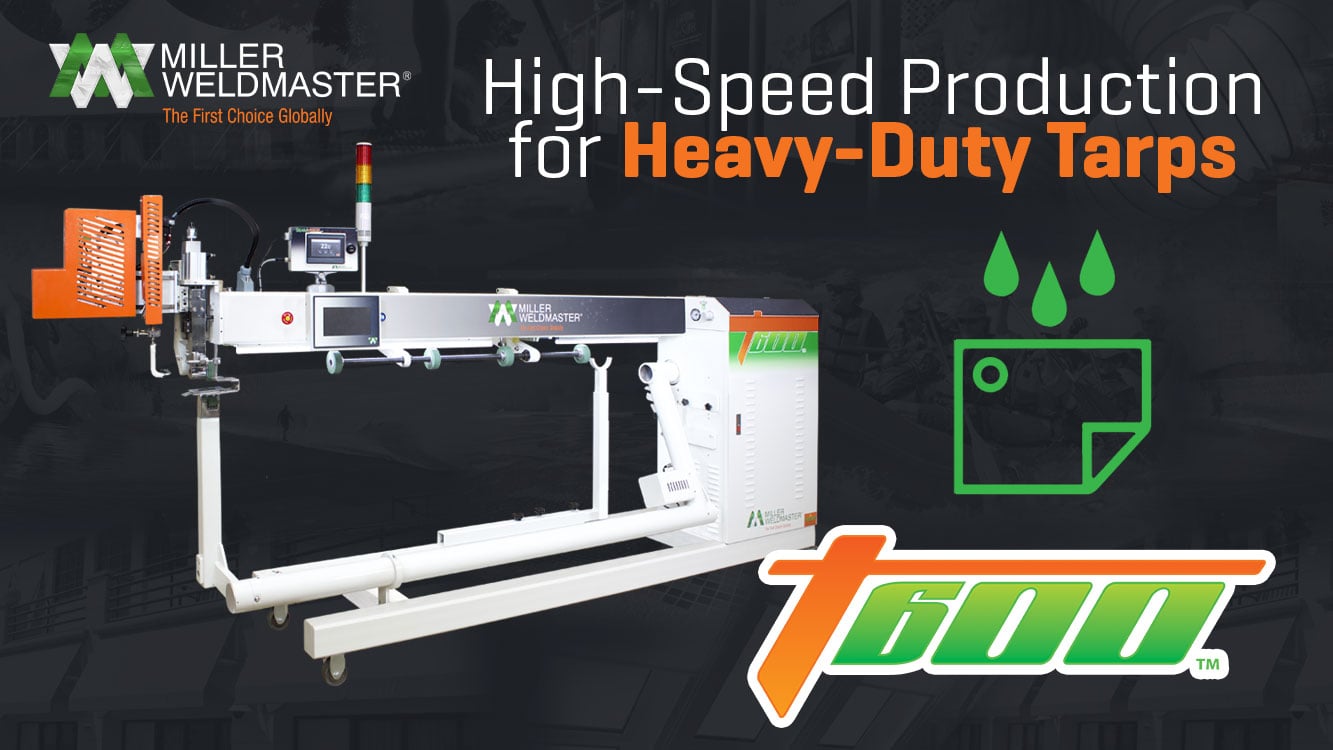
For demanding cover applications, the T600 Cover heavy-duty tarp welder provides another option for fabricators looking to improve the efficiency of industrial cover production.
The objective is not simply to weld faster. It is to create a production process capable of maintaining consistent quality as volume increases.
Lead Time Considerations for Fleet Operators
Waiting until severe winter weather arrives to replace damaged or worn covers can create unnecessary pressure on both fleets and fabricators.
Fleet operators can benefit from inspecting covers ahead of the season and identifying worn seams, damaged attachment points, or covers approaching the end of their usable life; each truck tarpaulin should also be checked for damage before each use.
For fabricators, encouraging customers to plan ahead can help spread production across a more manageable schedule and reduce the pressure of last-minute seasonal orders.
Prepare Your Truck Cover Production for the Season Ahead
Producing a dependable truck cover requires more than choosing a durable fabric. Material selection, welding technology, seam construction, reinforcement, and production consistency all contribute to how the finished cover performs once it is on the road.
For fabricators preparing for winter demand, now is the time to evaluate whether your current welding process can keep pace with production while maintaining consistent seam quality.
Talk to a Miller Weldmaster specialist to discuss your truck cover application and find the right welding solution for your production needs.
Frequently Asked Questions About PVC Tarp Welding for Truck Covers
What is the best material for a truck tarp cover?
PVC-coated fabric is commonly used for truck covers because it combines durability, weather resistance, and thermoplastic weldability. The appropriate construction and weight depend on the type of truck, hauling application, expected loads, and operating environment, and durable tarpaulins can stay in service for a long time without damage when the construction matches the application.
Are welded tarp seams stronger than sewn seams?
Heat welding bonds compatible thermoplastic materials together to create a continuous seam without needle holes. This can provide strong, waterproof construction for applications exposed to weather, vibration, and repeated flexing. Actual seam performance depends on material compatibility and properly controlled welding parameters.
What weight PVC tarp is used for truck covers?
There is no single PVC fabric weight appropriate for every truck cover. Material selection depends on factors such as whether the cover is being used on a flatbed, dump truck, open bed, or side curtain, as well as expected abrasion, flexibility, and environmental exposure.
How far apart should grommets be spaced on a truck tarp?
Heavy-duty tarp applications may commonly use spacing around 12 to 18 inches, but there is no universal spacing appropriate for every truck cover. High-wind, high-vibration, corner, and other high-load areas may require tighter spacing or additional reinforcement. The spacing should also fit the actual securing method, such as ropes or spring clamps, and the tools used should not damage the tarp or hardware.
핫 웨지 용접은 어떤 용도로 사용되나요?
Hot wedge welding uses direct contact with a heated metal wedge to heat thermoplastic surfaces before pressure bonds them together. It is well suited for long, straight seams on compatible coated fabrics and is commonly used in industrial tarp and cover fabrication.
Can PVC tarps be repaired if a seam fails?
In many cases, compatible PVC-coated fabrics can be repaired by welding a patch or reworking the affected area. After repair, ongoing maintenance should include cleaning the tarp with mild soapy water and a soft brush, gently scrubbing as needed, and avoiding strong cleaners that can harm the fabric. The appropriate repair method depends on the location and extent of the damage, material condition, and whether enough sound material remains to create a reliable weld. Truck tarps should also be kept dry to prevent contamination and should not be opened while driving at high speeds.